 EN
EN
STEP 1
Full vehicle warranty for 2 years
2026/08/03
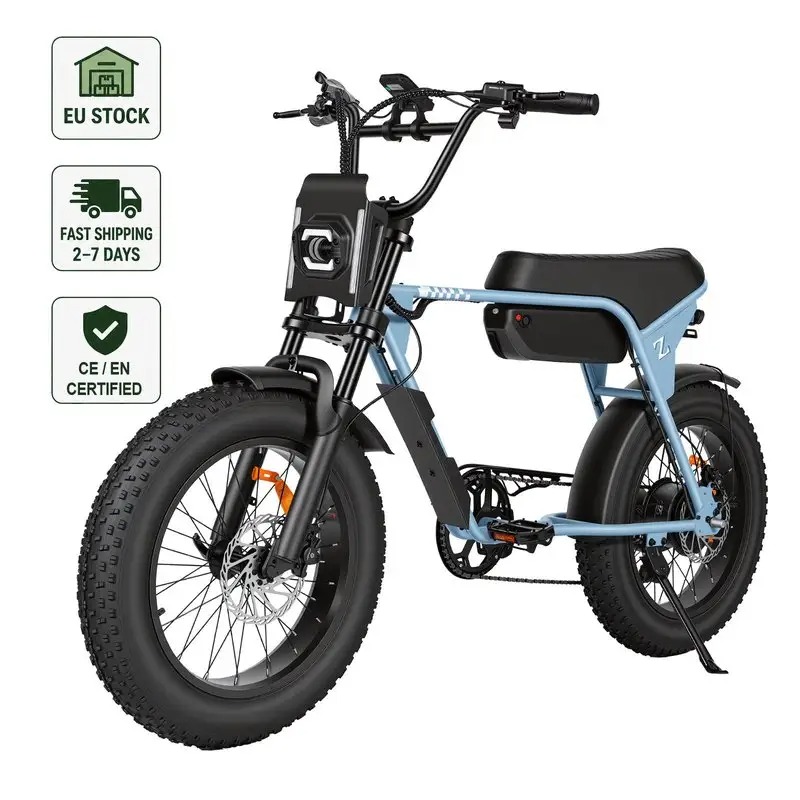
Understanding how payload impacts the range of 48v ebikes is critical for anyone relying on electric cargo bikes for business or personal transportation. The relationship between weight and battery performance directly influences how far your commuter ebike can travel on a single charge. As industries and individuals increasingly adopt electric bike wholesale solutions for urban logistics and daily commuting, understanding this payload-range dynamic becomes essential for informed purchasing and operational decisions.
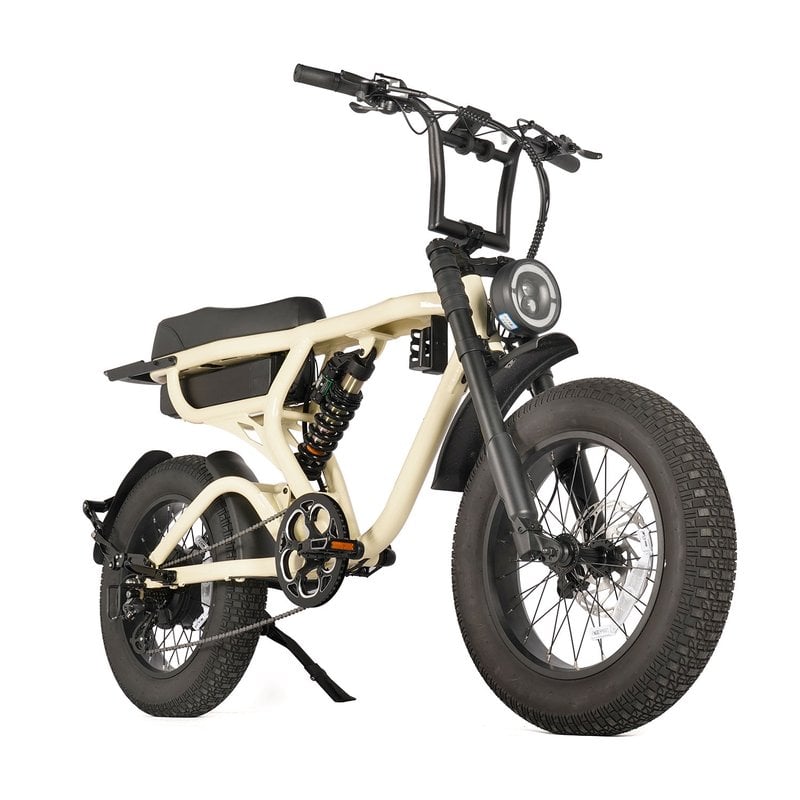
The performance characteristics of cargo 48v ebike models are fundamentally shaped by weight dynamics. When you load a commuter ebike with additional payload, the motor must work harder to propel both the bike and the cargo forward. This increased demand on the battery accelerates energy depletion, directly reducing overall range. Recognizing how different payload levels affect distance capacity helps fleet managers, delivery operators, and individual riders plan routes effectively and avoid unexpected range limitations.
The electric motor in a 48v ebike draws power proportionally to the load it must move. Heavier payloads require the motor to produce more torque, consuming battery energy more rapidly. For electric bike wholesale buyers managing large fleets, even small reductions in per-unit range can compound into significant operational inefficiencies. The motor's efficiency curve demonstrates that incremental weight increases create non-linear energy consumption patterns, meaning doubling the payload doesn't simply halve your range—it often reduces it more dramatically.
Additional cargo increases rolling resistance and mechanical friction throughout the drivetrain components. Heavier 48v ebikes experience greater friction in the chain, hub, and bearings, demanding more continuous energy expenditure. A commuter ebike carrying maximum payload will experience measurable increases in energy loss compared to the same bike operating at lighter weights. This friction penalty compounds over longer distances, making payload consideration increasingly important for riders planning extended routes or professional delivery operations.
Most 48v ebike models specify maximum payload capacities between 100 and 150 pounds, though cargo-specific variants designed for electric bike wholesale distribution often support higher weights. These limits exist not only for legal liability but because exceeding them creates mechanical stress that accelerates component wear and battery degradation. Commuter ebike riders and fleet managers should treat published weight limits as firm operational boundaries. Operating within these parameters ensures optimal battery performance, maintains the warranty, and preserves the bike's structural integrity across its operational lifespan.
Field testing demonstrates that a typical 48v ebike carrying 25 percent of its rated payload capacity experiences approximately 15 to 20 percent range reduction. At 50 percent capacity, riders often observe 30 to 40 percent range loss. Reaching maximum payload capacity can result in 50 percent or greater range reduction compared to unloaded operation. For commuter ebike applications in urban delivery and cargo transport, understanding these degradation curves enables operators to calculate realistic daily distance capabilities and plan charging strategies accordingly.
Professional users of cargo 48v ebikes optimize operations by pre-planning routes around known charging locations and accurately calculating payload requirements before each trip. Electric bike wholesale operators managing commuter ebike fleets implement strategic charging stations at distribution hubs to break longer routes into segments where payload levels are managed dynamically. This approach maximizes operational efficiency without requiring constant range anxiety. Understanding your vehicle's specific range degradation curve—whether a particular 48v ebike loses 2 percent range per 10 pounds of cargo—enables data-driven dispatch planning.
Maintaining optimal tire pressure becomes increasingly critical when operating a 48v ebike under heavy payload. Under-inflated tires increase rolling resistance and energy consumption exponentially under weight stress. Regular drivetrain maintenance, clean chains, and properly adjusted bearings reduce friction losses that compound with heavier loads. Commuter ebike operators should implement scheduled maintenance protocols that account for the accelerated wear patterns associated with carrying maximum authorized payloads. These operational disciplines preserve both range performance and component lifespan simultaneously.
Yes, uphill terrain amplifies the range impact of payload dramatically. The motor works against both gravity and load simultaneously, creating multiplicative energy demands. A commuter ebike on flat ground with 50 pounds of cargo might lose 35 percent range, but climbing the same distance uphill could reduce range by 50 to 60 percent or more. Terrain profile analysis should always precede route planning for cargo operations using 48v ebikes.
Cold temperatures reduce battery efficiency inherently, and adding payload compounds this reduction. A 48v ebike might experience 20 percent range loss from cold conditions alone, and carrying full payload in winter could create cumulative range reductions approaching 60 percent. Electric bike wholesale operators managing winter operations should account for both factors and reduce daily route expectations accordingly, or implement battery pre-warming protocols.
Upgrading to higher capacity batteries on compatible 48v ebike platforms improves total energy availability, partially offsetting payload-related range penalties. A commuter ebike equipped with a larger battery might restore 40 to 50 percent of lost range compared to unloaded operation. However, larger batteries add weight that creates its own efficiency trade-off, and compatibility, space constraints, and cost considerations limit upgrade applicability for many commercial electric bike wholesale scenarios.
2026/08/03
Fix time zones, language gaps, and unclear protocols—boost speed, cut costs, and scale confidently.
2026/08/03
Avoid liability & import bans: Learn IEC 62619, UN 38.3, and UL 2271—plus how to verify real compliance (not fakes).
2026/08/03
Learn precise air pressure, rebound & compression tuning for optimal suspension performance. Get pro-level setup tips now.
2026/08/03
Discover how voltage drop saps performance—and proven fixes to restore responsiveness, range, and battery life. Read now.
2026/08/03
Discover data-backed protocols, smart infrastructure & operational fixes. Optimize now.
Comprehensive warranty, fast parts shipping, remote diagnostics and local dealer training


