 EN
EN
STEP 1
Full vehicle warranty for 2 years
2026/08/18
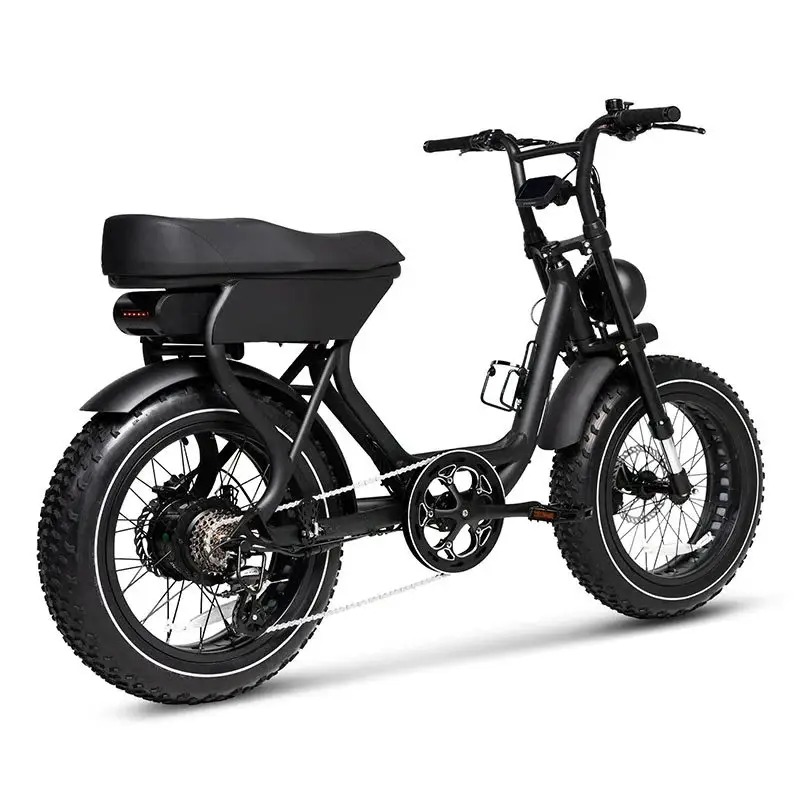
Heavy load transport demands a vehicle built with sufficient power and torque to handle demanding terrain and substantial cargo. The choice between a 1000w electric bike and a 750w e-bike fundamentally impacts your ability to haul equipment, materials, or significant personal weight reliably. While both are capable machines, the power differential creates real consequences for acceleration, hill climbing, and sustained performance under stress.
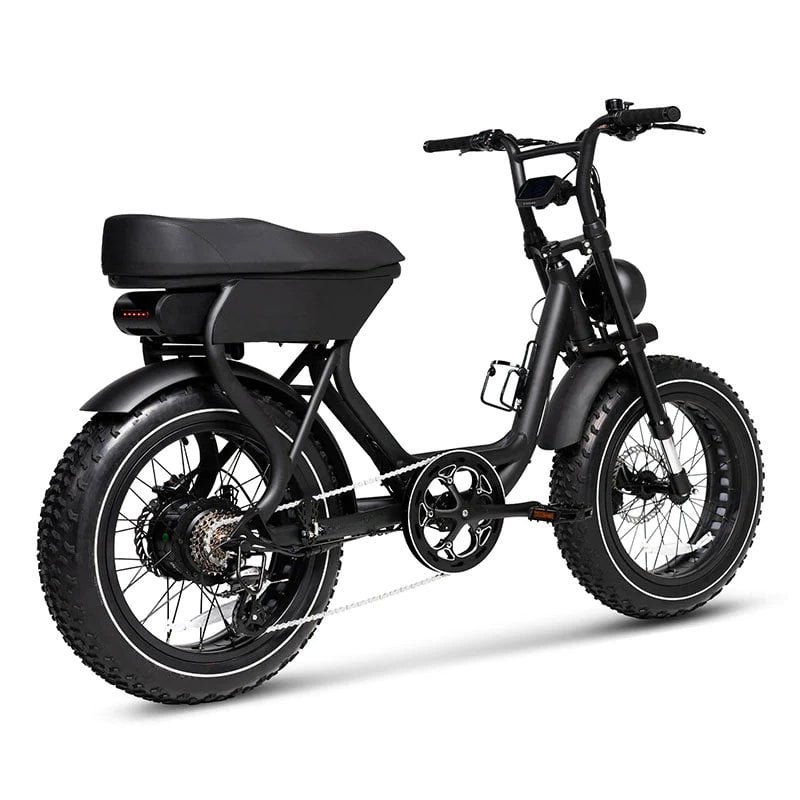
Understanding the practical differences between these power classes ensures you invest in the right technology for your specific workload. A 1000w electric bike represents a significant step up in capability, while 750w e-bikes remain popular for lighter applications. This guide breaks down performance metrics, practical trade-offs, and decision factors to help you choose the right platform for heavy load transport.
A 1000 watt ebike delivers 33 percent more raw power than a 750w motor, a meaningful gap in sustained output. This extra capacity translates into higher peak torque, typically 80–100 newton-meters for quality 1000w systems versus 60–80 newton-meters for 750w configurations. Torque determines how quickly the motor accelerates your load from a standstill and how effectively it pushes through steep inclines or sand.
The motor controller on a 1000 watt e-bikes also handles sustained demands better. When hauling 50–100 pounds consistently, a 750w motor operates closer to its thermal ceiling, risking throttle cutoff or performance throttling during extended use. An ebike 1000w 48v system maintains steadier power delivery under continuous load, reducing temperature-related performance drops and extending motor lifespan.
Most 1000w fat tire ebike systems use 48-volt battery packs, while 750w e-bikes often operate on 36-volt or 48-volt configurations. A 48-volt platform allows the motor to draw higher amperage more efficiently, which means better acceleration and smoother mid-range power delivery. The ebike 1000w 48v combination creates a synergistic relationship where voltage and wattage work together to maximize performance without excessive current draw.
Higher voltage systems also experience less voltage sag under load. When you apply full throttle while climbing with heavy cargo, a 48-volt battery maintains closer to nominal voltage than a 36-volt setup would, ensuring consistent performance throughout the charge cycle.
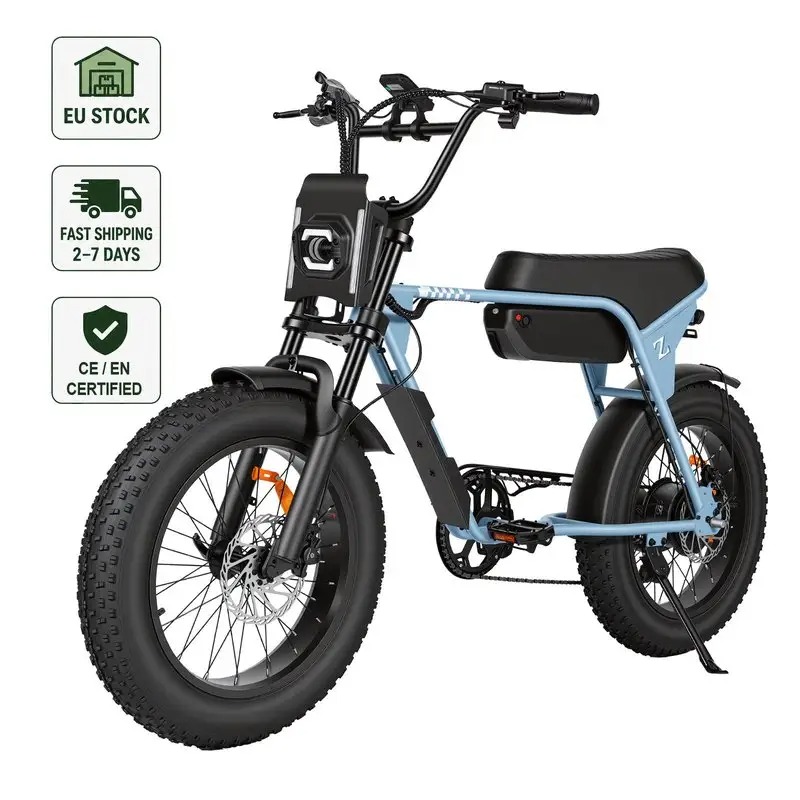
A 1000w fat tire ebike is engineered to handle combined rider and cargo weight exceeding 300 pounds on modest slopes. The extra motor power means steeper hills remain manageable, and acceleration with a full load feels responsive rather than labored. A 750w e-bike can handle similar absolute weight on flat terrain, but performance degrades noticeably on inclines or soft surfaces like sand or gravel.
For construction workers, delivery operators, or contractors moving equipment daily, the difference becomes operationally critical. Starting uphill from a stop with 80–100 pounds of cargo on a 1000w electric bike remains predictable. The same scenario on a 750w system may require multiple attempts or assistance to clear the slope, reducing efficiency and increasing fatigue.
A 1000 watt ebikes conquers grades up to 20–25 percent continuously, depending on rider weight and cargo configuration. A 750w e-bike typically manages 15–18 percent grades reliably before performance becomes uncertain. On flat or gentle terrain, this distinction matters less, but industrial or agricultural transport routes frequently include challenging topography where extra power prevents costly delays.
Range does decrease with a 1000w fat tire ebike compared to 750w models under identical battery capacity, since higher power consumption depletes the battery faster at full throttle. However, most users operate below maximum power, so practical range differences shrink considerably. A 48-volt 15–20 Ah battery paired with a 1000w motor typically delivers 30–50 miles of mixed use, competitive with many 750w systems when accounting for realistic riding patterns.
In many jurisdictions, 1000 watt e-bikes cross into classification levels requiring licensing, insurance, or helmet mandates that do not apply to 750w models. Before purchasing a 1000w electric bike, verify local regulations, as legal status varies significantly by region and jurisdiction. Some areas treat anything above 750w as a moped or motorized vehicle rather than a bicycle, which affects where you can ride and storage requirements.
Supply-chain dynamics also favor 750w systems in many markets, making ebike 1000w 48v configurations harder to find in certain regions. Availability constraints may force a practical choice toward 750w if finding your exact 1000w fat tire ebike model requires extensive searching or shipping delays.
A 1000w electric bike typically commands 15–25 percent higher purchase price than an equivalent 750w model, though the price gap narrows as you move toward mid-range or commercial-focused brands. Maintenance costs remain similar between power classes, but a 1000w system may experience slightly accelerated wear on drivetrain components if used constantly at maximum throttle. Operating closer to nominal power on a 1000 watt ebikes extends component life versus running a 750w motor at continuous maximum output.
Battery replacement represents the largest mid-life expense. A quality 48-volt battery for a 1000w fat tire ebike costs 400–700 dollars, similar to 750w battery packs, so wattage does not significantly impact battery expense. Choosing the right platform depends more on matching power output to your actual load requirements than on maintenance burden.
No, a 750w e-bike handles parcels, groceries, and light tools effectively on relatively flat terrain. Reserve a 1000w electric bike for consistent heavy loads, steep hills, or professional use. Overpowering your actual needs wastes money on unnecessary capacity and may complicate legal compliance unnecessarily.
A 1000 watt ebikes accelerates 10–15 percent quicker from rest and maintains higher speed up steep grades, but top speed depends on your local speed-limiters and pedal assistance levels. On flat ground at moderate assist levels, real-world speed differences shrink to 2–5 mph. The advantage emerges most clearly during hill climbs or rapid acceleration with heavy cargo, not on velocity alone.
Yes, modern 1000w electric bikes feature sealed motor controllers and water-resistant connectors designed for wet environments. However, intentional submersion remains risky. Regular hose-down cleaning and air-drying after wet-weather use keeps a 1000w fat tire ebike functional for years. Avoid splashing electrical connections directly and inspect cable glands for cracks before winter storage.
2026/08/03
Fix time zones, language gaps, and unclear protocols—boost speed, cut costs, and scale confidently.
2026/08/03
Avoid liability & import bans: Learn IEC 62619, UN 38.3, and UL 2271—plus how to verify real compliance (not fakes).
2026/08/03
Learn precise air pressure, rebound & compression tuning for optimal suspension performance. Get pro-level setup tips now.
2026/08/03
Discover how voltage drop saps performance—and proven fixes to restore responsiveness, range, and battery life. Read now.
2026/08/03
Discover data-backed protocols, smart infrastructure & operational fixes. Optimize now.
2026/08/03
How payload cuts 48V cargo ebike range by 15–50%+ — backed by real-world degradation curves, motor load science & fleet optimization strategies.
Comprehensive warranty, fast parts shipping, remote diagnostics and local dealer training


