 EN
EN
STEP 1
Full vehicle warranty for 2 years
2026/08/17
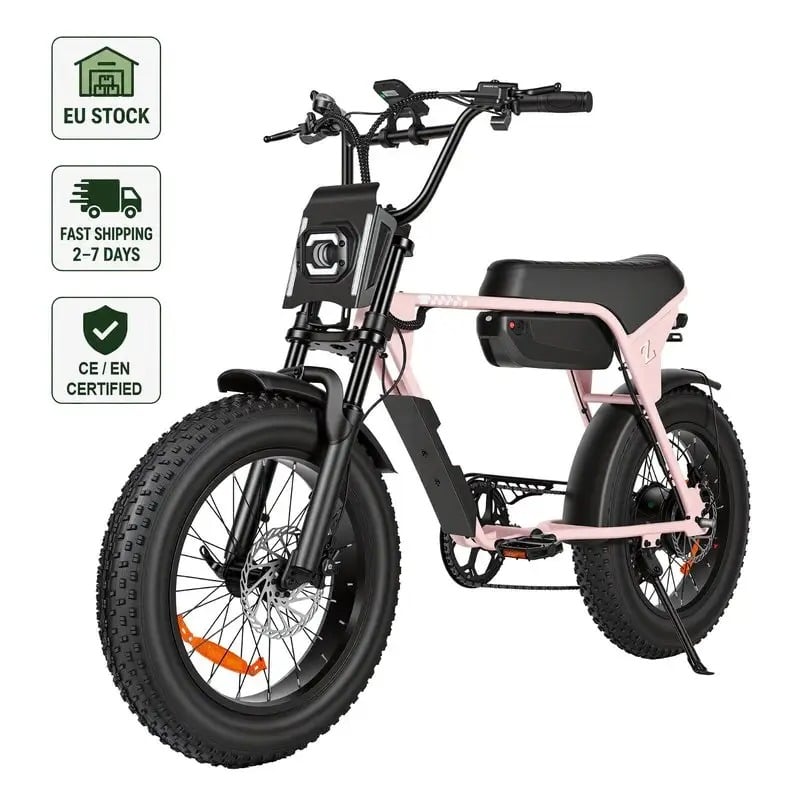
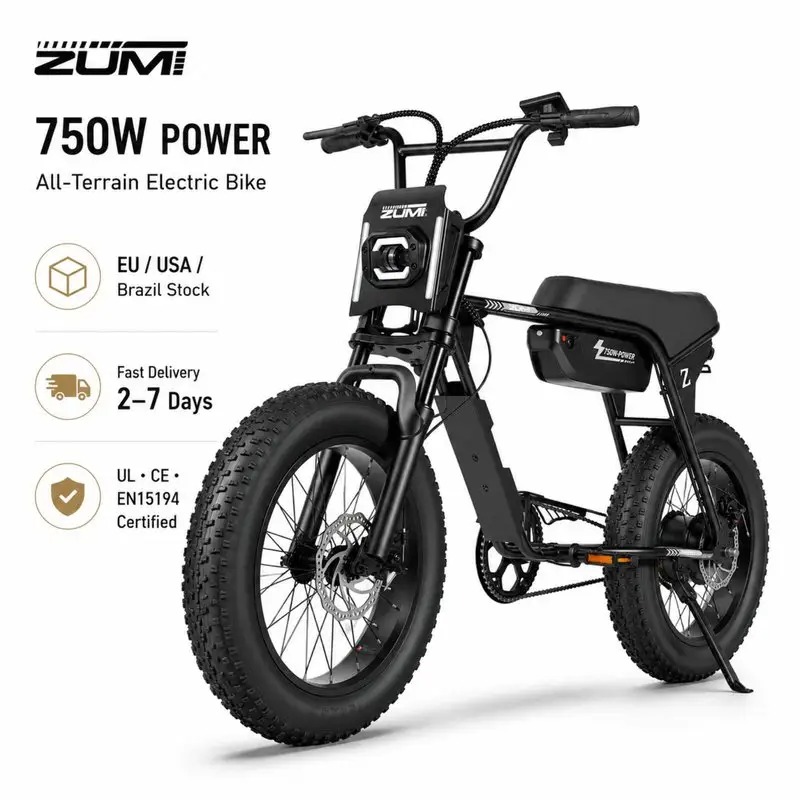
When tackling steep hills on an electric bike, motor power becomes the defining factor between a smooth climb and a frustrating struggle. The choice between a 750w electric bike and a 500w model directly impacts your ability to ascend challenging terrain without overheating the motor or draining the battery prematurely. Understanding the practical differences between these power levels helps you make an informed decision that aligns with your riding environment and performance expectations.
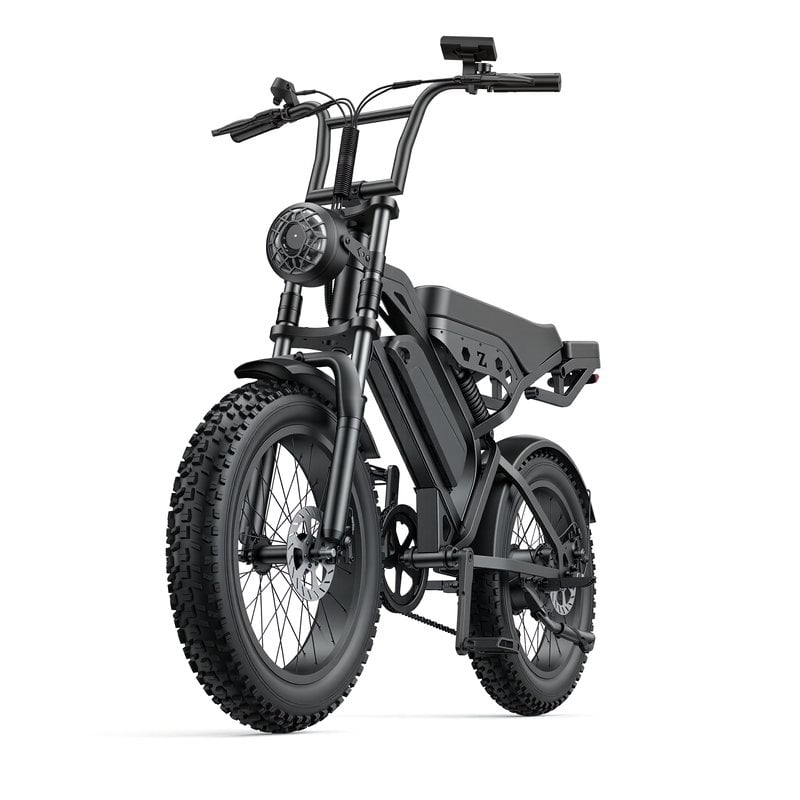
Motor power in electric bikes is measured in watts and directly correlates to torque delivery and acceleration capability. A 500w motor provides adequate assistance for moderate inclines and flat terrain, while 750 watt electric bikes for sale offer significantly more climbing force. This comparison examines why hill-climbing performance diverges between these models, how terrain steepness affects motor demand, and which power level best serves different rider profiles and geographic conditions.
The 750w ebikes deliver approximately 50% more power than 500w systems, translating directly to higher torque at the wheel. Torque is the rotational force that propels you uphill against gravity and rolling resistance. When you encounter a steep gradient, the motor must work harder to maintain speed and prevent the bike from slowing excessively. A 750 watt electric bike maintains momentum on slopes where a 500w model begins to struggle, requiring you to pedal harder or walk the bike to the summit.
The relationship between wattage and hill performance is not linear but proportional. A 750w fat tire ebike can climb steeper grades while maintaining a consistent cadence, meaning your legs experience less fatigue. Motor efficiency also improves at higher power ratings because the motor operates within a more comfortable power band, generating less heat and preserving battery range over the same distance.
Five-hundred-watt e bike 750 w comparison reveals that 500w motors begin experiencing thermal stress on sustained climbs above 8–10% grade. Extended high-effort output causes the motor controller to throttle back automatically, reducing power delivery to prevent component damage. This means your assistance suddenly diminishes at the most demanding moment, forcing you to rely entirely on your own leg power. Riders frequently report that 500w systems lose effectiveness partway up long hills, especially in hot weather or at high elevations where motor cooling becomes challenging.
The battery also depletes faster under 500w motor stress because the system requires sustained maximum output. A 750 watt electric bike, by contrast, maintains steady power delivery without thermal limiting, allowing you to reach the top with greater battery reserve and significantly less personal exertion.
Cities built on hills, such as San Francisco or Seattle, and mountain regions with extended grades above 12% require motor power that 500w systems rarely sustain reliably. A 750w fat tire ebike handles these conditions with reserve capacity, keeping you moving forward without motor throttling or excessive pedal effort. Urban commuters who face daily steep sections benefit dramatically from the extra power, eliminating the frustration of pushing a 500w bike up the final blocks to home or office. Mountain roads with grades exceeding 15% are essentially off-limits for 500w systems under any but the lightest rider and minimal cargo conditions.
Routes that feature multiple hills or sustained climbing demand motors with thermal headroom. The 750 watt electric bikes for sale outperform 500w models across cumulative elevation gain because they never approach thermal limits on individual climbs. After descending and regregrouping energy, riders on 750w systems tackle the next hill with the motor operating at optimal efficiency. Conversely, 500w motors that have been pushed hard begin the next climb already thermally fatigued, resulting in compounding performance loss. For endurance riding in hilly terrain, the 750w fat tire ebike is the practical choice for consistent performance throughout the entire ride.
The power needed to climb depends on total system weight, including rider, bike, and cargo. Heavier riders and those carrying tools, groceries, or equipment require more motor power to achieve the same climbing speed as lighter riders. A 200-pound rider on a 750 watt electric bike with 20 pounds of cargo can climb at a sustainable pace, while the same person on a 500w system will struggle and experience motor throttling. This weight-dependent performance gap widens dramatically on steep terrain. For delivery riders, contractors, or anyone regularly carrying significant cargo, the 750w ebikes eliminate the performance compromise that 500w motors cannot overcome.
Different riders have different leg strength and fitness levels. Older riders or those recovering from injury gain tremendous benefit from 750w fat tire ebike systems because the motor handles more of the workload, preserving joint health and reducing fatigue-related accidents. Recreational riders who want to explore hilly regions without becoming exhausted find that 750 watt electric bikes for sale keep cycling enjoyable across varied terrain. Professional users such as mountain guides or park rangers rely on reliable 750w ebikes because motor performance cannot degrade during the middle of a working day. The motor power determines whether the ebike enhances capability or merely reduces effort slightly.
A 750w electric bike operates more efficiently than a 500w system under heavy load because the motor works within an optimal power band rather than at maximum output continuously. When a 500w motor pushes near its limits, energy losses increase and heat generation rises, both reducing overall efficiency. A 750 watt electric bike performs the same work with less stress, allowing better energy conversion from battery to wheel propulsion. This efficiency advantage becomes pronounced on rolling hills where sustained climbing is required.
Counterintuitively, a 750w fat tire ebike may deliver comparable or better range on hilly terrain than a 500w model because the 750w motor prevents the battery from being repeatedly drained during thermal limiting and overwork. A struggling 500w system demands extended full-power output, accelerating battery depletion. The 750 watt electric bikes for sale maintain energy reserves better because climbing feels effortless and the motor never enters protective throttling modes. For day trips covering 30–50 miles of hilly terrain, the 750w system often outperforms the 500w on total distance achieved before battery exhaustion.
E bike 750 w regulations vary by region. Many U.S. states classify ebikes with motors up to 750w as pedal-assist bicycles, which are permitted on most bike paths and roads. However, some jurisdictions impose stricter limits, typically at 500w or 250w. European regulations often cap assisted ebikes at 250w. Before purchasing a 750w fat tire ebike, research your local and state regulations to confirm legality on your intended riding routes. Some regions allow 750w systems only on private property or specific trails.
Charging a 750 watt electric bike costs approximately 15–20 cents per full charge, depending on local electricity rates and battery capacity. This translates to roughly $3–5 per month for regular daily riding, comparable to the cost of one coffee. A 750w fat tire ebike may use slightly more electricity than a 500w system, but the difference is negligible relative to your overall household consumption. The cost savings from avoiding car trips far outweigh the minimal charging expense, making 750w ebikes economically practical for commuters and regular riders.
Installing a more powerful motor on an existing 500w ebike is technically possible but impractical and risky. The bike frame, brakes, and battery system may not be designed for the increased power output and stress. Battery capacity, controller rating, and mechanical components must all be compatible with the higher wattage. Rather than attempting an upgrade, purchasing a purpose-built 750w fat tire ebike ensures all components are engineered to work together safely and reliably. New 750 watt electric bikes for sale come with manufacturer warranties and tested performance characteristics that retrofitted systems cannot guarantee.
2026/08/03
Fix time zones, language gaps, and unclear protocols—boost speed, cut costs, and scale confidently.
2026/08/03
Avoid liability & import bans: Learn IEC 62619, UN 38.3, and UL 2271—plus how to verify real compliance (not fakes).
2026/08/03
Learn precise air pressure, rebound & compression tuning for optimal suspension performance. Get pro-level setup tips now.
2026/08/03
Discover how voltage drop saps performance—and proven fixes to restore responsiveness, range, and battery life. Read now.
2026/08/03
Discover data-backed protocols, smart infrastructure & operational fixes. Optimize now.
2026/08/03
How payload cuts 48V cargo ebike range by 15–50%+ — backed by real-world degradation curves, motor load science & fleet optimization strategies.
Comprehensive warranty, fast parts shipping, remote diagnostics and local dealer training


