 EN
EN
STEP 1
Full vehicle warranty for 2 years
2026/08/10
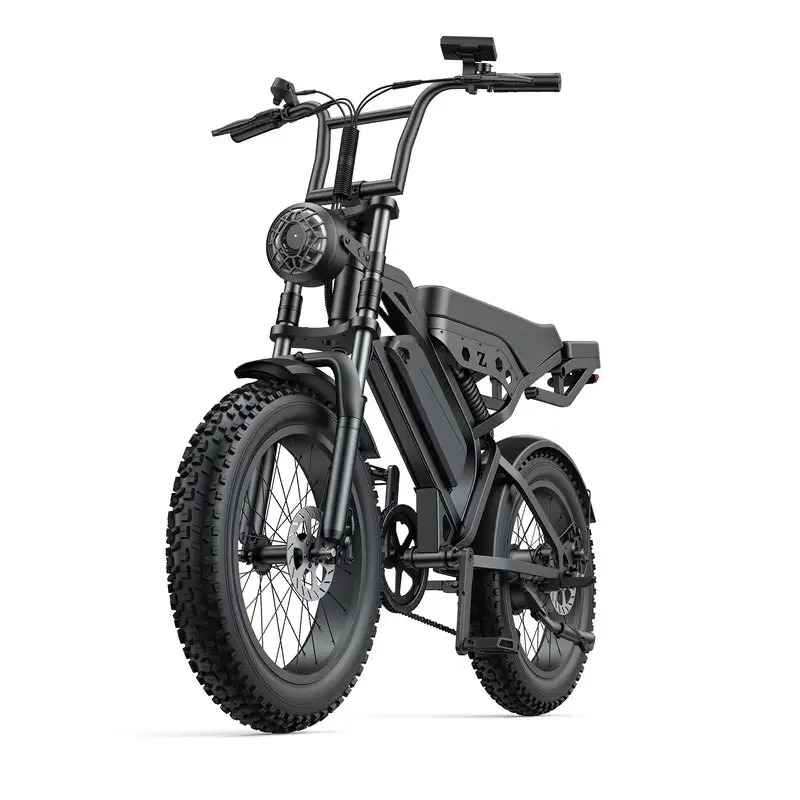
Building a custom electric bike 48v 1500w requires careful attention to every component, and the battery management system stands as one of the most critical decisions in your project. The BMS acts as the electronic guardian of your battery pack, protecting it from overcharging, over-discharging, overcurrent conditions, and thermal runaway. Without a properly matched BMS, even the highest-quality battery cells can fail prematurely, lose capacity rapidly, or present safety hazards during operation.
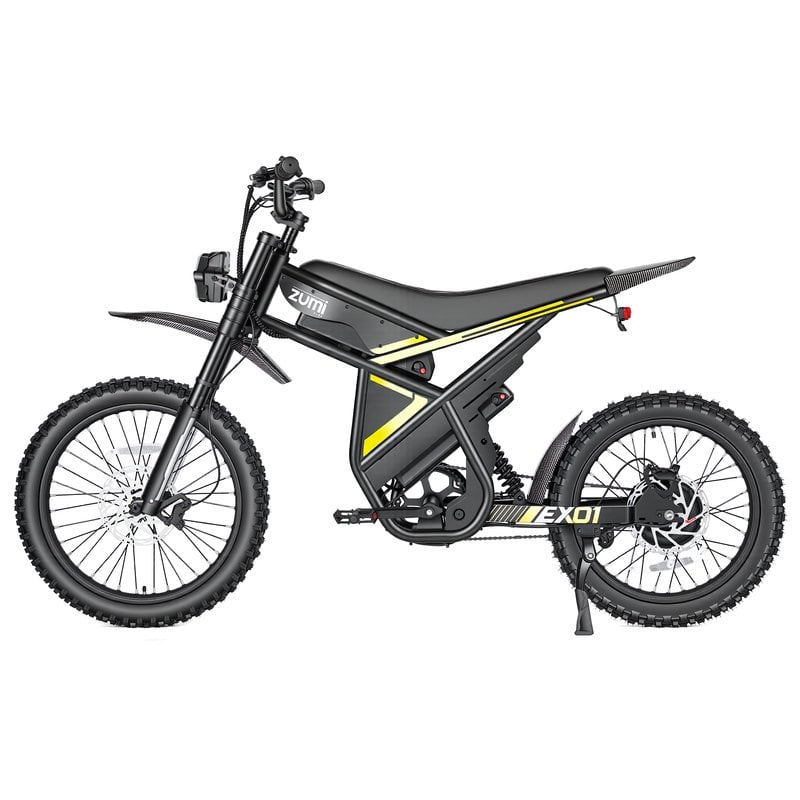
Selecting the correct BMS for your 48v ebike involves understanding voltage specifications, current ratings, cell count configuration, and the specific demands of a electric bike 48v 1500w drivetrain. A 1500w ebike system operates at high power levels, which means your BMS must handle continuous discharge currents reliably while maintaining voltage stability across all riding conditions. The stakes are high because an undersized or incompatible BMS can limit performance, trigger unnecessary shutdowns, or create reliability problems mid-ride.
A battery management system monitors and controls multiple safety parameters simultaneously. It tracks individual cell voltages within your 48v battery pack to ensure no single cell becomes overcharged or undercharged relative to others. For a 48v ebike system using thirteen 3.7-volt cells in series, the BMS prevents individual cell voltages from exceeding 4.25 volts during charging or dropping below 2.5 volts during discharge. This cell-level monitoring extends battery lifespan significantly and prevents the internal damage that causes sudden capacity loss.
The BMS also manages current flow during both charging and discharging cycles. A 1500w ebike at 48 volts draws approximately 31 amperes at peak power, which represents substantial current flow through the battery pack. Your BMS must feature a discharge rating that safely exceeds this peak current specification, typically by a 20 to 30 percent safety margin. Temperature monitoring represents another critical protection layer, as lithium-ion cells degrade rapidly when operating above their optimal temperature range. An electric mountain bike subjected to aggressive riding or extreme weather conditions benefits significantly from a BMS with temperature sensors and thermal cutoff capabilities.
A 48-volt system requires a BMS explicitly rated for exactly 48 volts and the correct series cell count. Most 48v configurations use either thirteen cells (48.1 nominal) or sixteen cells (57.6 nominal for systems sometimes marketed as 52v). Confusion between these configurations causes the most common BMS selection mistakes. Installing a 16-cell BMS on a 13-cell 48v ebike pack results in incomplete protection, as the BMS cannot properly monitor or balance all cells. Conversely, a 13-cell BMS connected to a 16-cell system will register fault conditions and disable the 1500w ebike prematurely during normal operation.
Verify the exact cell count in your battery pack before purchasing any BMS. Most reputable 48v battery manufacturers clearly document whether their packs contain thirteen or sixteen cells. Cross-referencing this specification with your BMS documentation prevents costly compatibility errors that render either the battery or the BMS non-functional.
A 1500w electric mountain bike motor operating at 48 volts creates specific current demands that your BMS must handle reliably. Peak current during acceleration can reach 35 to 40 amperes depending on motor characteristics and terrain conditions. Continuous riding in moderate-to-aggressive style typically sustains 25 to 30 amperes.
An undersized BMS creates several problems. If the discharge rating falls below 35 amperes on a 1500w ebike, the BMS may trigger low-voltage or overcurrent fault conditions during normal riding, causing the motor controller to cut power unexpectedly. This not only feels dangerous but also indicates that your battery management system is operating at or beyond its design limits, which accelerates internal component degradation and shortens BMS lifespan.
High-current discharge through a BMS generates internal heat, particularly in the metal-oxide-semiconductor field-effect transistors (MOSFETs) that switch current on and off. A properly sized BMS for a 1500w ebike incorporates thermal management features such as heatsinking or balanced current distribution across multiple parallel MOSFET sets.
For an electric mountain bike frequently used in warm climates or demanding conditions, a BMS with integrated temperature sensors and thermal management outperforms basic models. The slight additional cost provides meaningful reliability and protection against failures during critical moments.
The BMS charging circuit must match your charger output specification and optimize cell preservation during recharge cycles. A typical 48v ebike battery charges most safely at 2 to 4 amperes per hour, which means a 10-ampere-hour pack requires four to ten hours for full charge. Some 1500w ebike users employ fast-charging systems delivering 8 to 10 amperes, which charges faster but generates more heat stress on battery cells. Your BMS must support the charging amperage rating of your chosen charger without triggering false protection faults.
Many advanced BMS units feature multi-stage charging protocols that adjust charge current based on battery state and cell conditions. These systems start with high-current bulk charging when the pack is deeply depleted, then taper current as cells approach full charge.
Active cell balancing represents a valuable BMS feature for any 48v 1500w ebike owner committed to long battery life. During charging, a balancing circuit monitors individual cell voltages and automatically draws small charge currents from cells reaching full charge before others catch up. This ensures all cells in your 48-volt pack reach their target voltage simultaneously, preventing the voltage mismatch that causes premature capacity fade. Without active balancing, cells can drift out of alignment over many charge cycles, causing the weakest cell to limit total pack capacity long before optimal lifespan ends.
The most frequent BMS selection error involves confusing nominal voltage with maximum voltage specifications. A 48v ebike battery nominally rated at 48 volts actually charges to approximately 54 volts (13 cells × 4.25 volts each) at full charge. Many inexperienced builders purchase BMS units rated for only 50 volts, thinking this provides adequate headroom. In reality, the charger will bring the battery pack to 54 volts, immediately triggering overvoltage protection in a 50-volt BMS.
Riders frequently underestimate the actual current demands of their 1500w electric mountain bike systems. A motor controller delivering 1500 watts draws current based on battery voltage, and actual motor power varies between 1200 and 1800 watts depending on throttle input and terrain resistance.
An undersized BMS for a 1500w ebike triggers overcurrent protection during normal operation, cutting motor power unexpectedly. The BMS operates constantly at or beyond its design limits, generating excessive internal heat and internal component stress that shortens lifespan dramatically. You lose throttle response, cannot achieve full performance from your motor, and face potential BMS failure during critical moments. Always match or exceed the calculated continuous current demand of your electric mountain bike system with your BMS current rating.
Reusing an old BMS presents multiple risks unless you verify exact compatibility with your new 48v 1500w system. Older BMS units may have lower current ratings designed for 500-watt or 750-watt motors, insufficient voltage headroom for modern chargers, or degraded internal components reducing reliability. If the old BMS lacks documentation confirming its specifications, the safest approach involves purchasing a new BMS rated specifically for 48v systems with minimum 50-ampere continuous discharge, active cell balancing, and integrated temperature protection suitable for the demands of a high-power electric mountain bike.
Active cell balancing significantly extends battery life for any 48v 1500w ebike owner planning multi-year system use. Without balancing, cell voltage mismatches accumulate over hundreds of charge cycles, reducing usable pack capacity by 15 to 25 percent before nominal cycle life completion. For casual riders conducting occasional charge-discharge cycles, basic protection without balancing functions adequately. However, serious electric mountain bike enthusiasts or delivery service operators using their 1500w ebike daily benefit substantially from the active balancing feature, justifying the modest cost premium for this capability.
2026/08/03
Fix time zones, language gaps, and unclear protocols—boost speed, cut costs, and scale confidently.
2026/08/03
Avoid liability & import bans: Learn IEC 62619, UN 38.3, and UL 2271—plus how to verify real compliance (not fakes).
2026/08/03
Learn precise air pressure, rebound & compression tuning for optimal suspension performance. Get pro-level setup tips now.
2026/08/03
Discover how voltage drop saps performance—and proven fixes to restore responsiveness, range, and battery life. Read now.
2026/08/03
Discover data-backed protocols, smart infrastructure & operational fixes. Optimize now.
2026/08/03
How payload cuts 48V cargo ebike range by 15–50%+ — backed by real-world degradation curves, motor load science & fleet optimization strategies.
Comprehensive warranty, fast parts shipping, remote diagnostics and local dealer training


