 EN
EN
STEP 1
Full vehicle warranty for 2 years
2026/08/18
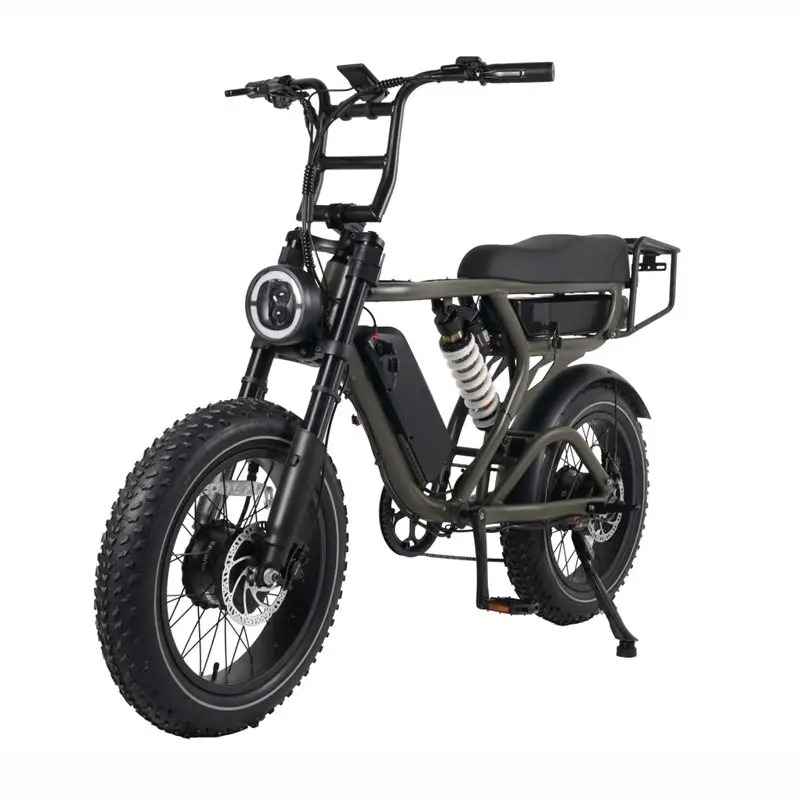
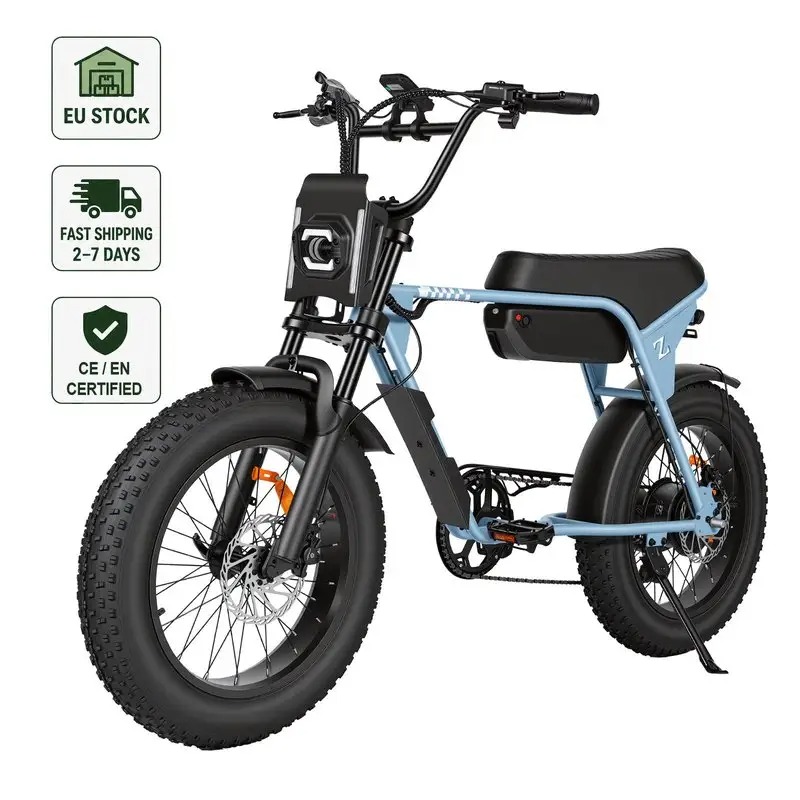
A 1000w electric bike demands a battery system engineered for sustained high power delivery. Unlike casual commuter ebikes that draw 250 to 500 watts, a 1000 watt e bikes platform requires batteries capable of handling continuous discharge rates that prevent voltage sag and maintain rider control across varied terrain. Understanding high-discharge battery technology is essential for anyone considering a 1000 watt ebikes investment or optimizing an existing system.
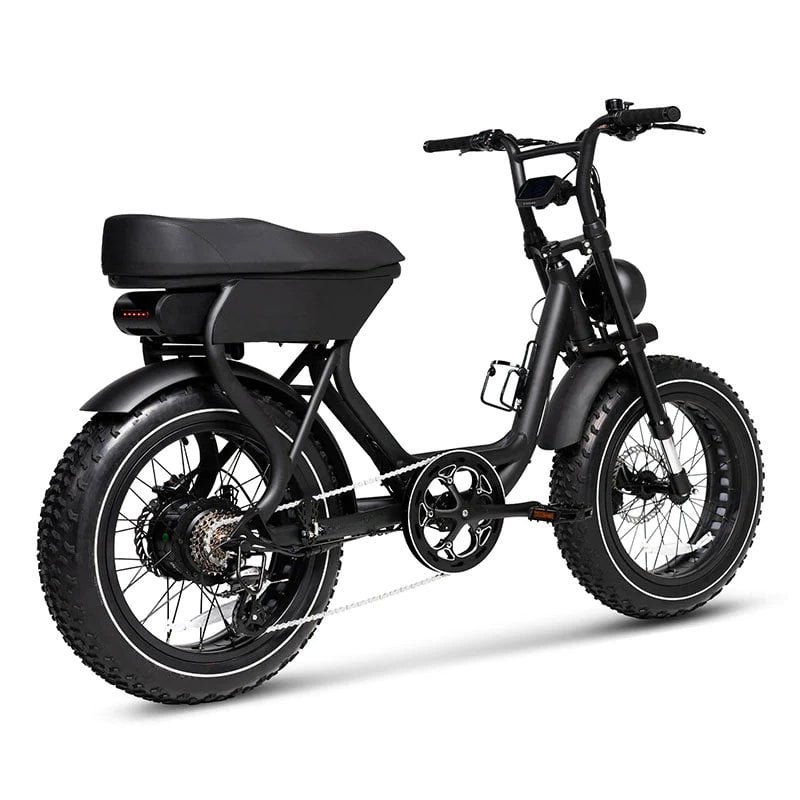
High-discharge batteries form the backbone of reliable performance on 1000w fat tire ebike systems. The combination of voltage, capacity, and discharge rating determines how efficiently your motor responds to demand. This guide explores the critical specifications, chemistry options, and practical considerations that separate premium high-discharge batteries from standard alternatives.
Modern 1000 watt e bikes rely almost exclusively on lithium-ion battery chemistry due to its superior energy density and discharge capability. Lithium-ion cells can sustain continuous discharge rates of 20 to 50 amps per cell, depending on chemistry type and pack configuration. This allows a single ebike 1000w 48v battery pack to deliver the 1000-watt continuous power without dangerous heat buildup or premature cell degradation.
Older lead-acid and nickel-metal-hydride batteries cannot match these performance characteristics. They suffer from weight penalties, reduced cycle life under high discharge, and inferior voltage retention during peak power demand. For a 1000w fat tire ebike, the efficiency difference is noticeable in acceleration response, hill-climbing ability, and real-world range.
High-discharge lithium packs use either cylindrical cells (like 18650 or 21700 format) or prismatic cells arranged in series and parallel configurations. Cylindrical cells offer excellent thermal management and proven manufacturing consistency, making them popular in 1000w fat tire ebike applications. Prismatic cells maximize volumetric efficiency but require more sophisticated battery management systems (BMS) to ensure even discharge distribution across cell groups.
For a 1000 watt ebikes system, the choice between cell types affects overall pack weight, charging speed, and lifespan under continuous high-discharge conditions. A well-designed cylindrical pack in an ebike 1000w 48v configuration typically outperforms poorly balanced prismatic alternatives in real-world durability.
The 48-volt standard dominates the 1000 watt e bikes market because it offers a practical balance between motor efficiency and battery pack voltage sag during high discharge. A 48V system uses thirteen or fourteen lithium cells in series, providing nominal voltage around 48 volts when fully charged. Most 1000w fat tire ebike motors are designed to operate across a 40 to 58 volt input range, accommodating normal discharge curves without performance loss.
When you see an ebike 1000w 48v specification, the 48V refers to nominal pack voltage while the capacity (measured in amp-hours or watt-hours) determines total energy available. A 1000 watt e bikes motor drawing 21 amps at 48V requires a battery with sufficient capacity to sustain that current for your intended ride duration. Battery management systems in quality 1000w fat tire ebike packs actively monitor voltage and current to prevent over-discharge below safe cutoff thresholds.
A high-discharge 1000w electric bike battery pack must distinguish between continuous discharge rate (C-rate) and peak or burst discharge capability. Continuous discharge refers to the amperage the pack can deliver indefinitely without temperature rise or cell damage. Peak discharge is the maximum current available for short periods, typically 10 to 30 seconds during acceleration or steep hill starts.
A 1000 watt ebikes system operating at full power requires a continuous discharge rating of at least 20 to 25 amps from a 48V battery pack. This translates to roughly 0.7 to 1.0 C-rate for most 50Ah capacity packs. Battery packs marketed for 1000w fat tire ebike use should prominently display both continuous and peak discharge specs; if only peak ratings appear, the manufacturer may be hiding insufficient continuous discharge capability.
A 1000 watt e bikes platform benefits from larger capacity batteries because higher amp-hour ratings distribute the discharge load across more cells. A 48V 15Ah pack (720Wh total energy) powering a 1000w fat tire ebike motor will deplete faster than a 48V 20Ah pack (960Wh) under identical riding conditions. Beyond range extension, the larger capacity pack operates at lower percentage of maximum discharge, generating less heat and stress on individual cells.
For riders frequently tackling hills or demanding terrain on their 1000 watt ebikes, a 20Ah or larger ebike 1000w 48v configuration provides a significant durability advantage. Battery cycle life is directly influenced by discharge depth and peak current; larger packs deliver both benefits simultaneously. Investing in additional capacity often costs less than premature battery replacement, making it economical for serious riders.
Modern 1000w fat tire ebike batteries incorporate sophisticated battery management systems (BMS) that monitor voltage, current, and cell temperature in real time. A quality BMS protects against over-discharge, over-charge, over-current, and cell imbalance. These protections are non-negotiable for 1000 watt e bikes because the high discharge rates create conditions where unmanaged cells can fail catastrophically.
When evaluating a 1000w electric bike battery, verify that the BMS implements active cell balancing during charging and discharge monitoring during use. Some lower-cost packs use passive balancing, which is insufficient for sustained high-discharge applications. A battery marketed for 1000 watt ebikes without active BMS features should be viewed as a reliability risk rather than a cost savings.
Most riders find that a 48V 15Ah to 20Ah capacity provides the best balance between weight, range, and cost for 1000 watt e bikes. If you ride frequently in hilly terrain or need extended range, opt for 20Ah or larger. Capacity directly impacts cycle life because larger packs operate at lower discharge stress, meaning your 1000w fat tire ebike battery will last longer before degradation becomes noticeable.
Standard 250 to 500 watt ebike batteries typically have insufficient continuous discharge ratings for 1000 watt e bikes. A regular ebike 1000w 48v battery must be specifically rated for high-discharge applications; using a mismatched battery risks overheating, BMS shutdown, or cell failure during peak power demand. Always verify continuous discharge specifications exceed 20 amps before pairing a battery with a 1000w fat tire ebike motor.
Charge your 1000 watt ebikes battery at moderate rates when possible, avoid deep discharges below 10 percent remaining capacity, and store the pack in a cool, dry environment when not in use. For a 1000w electric bike, high discharge cycles naturally stress battery cells more than casual use patterns, so proper charging discipline and storage care extend lifespan significantly. Most quality ebike 1000w 48v packs maintain 80 to 85 percent capacity after 500 to 800 cycles with good maintenance practices.
2026/08/03
Fix time zones, language gaps, and unclear protocols—boost speed, cut costs, and scale confidently.
2026/08/03
Avoid liability & import bans: Learn IEC 62619, UN 38.3, and UL 2271—plus how to verify real compliance (not fakes).
2026/08/03
Learn precise air pressure, rebound & compression tuning for optimal suspension performance. Get pro-level setup tips now.
2026/08/03
Discover how voltage drop saps performance—and proven fixes to restore responsiveness, range, and battery life. Read now.
2026/08/03
Discover data-backed protocols, smart infrastructure & operational fixes. Optimize now.
2026/08/03
How payload cuts 48V cargo ebike range by 15–50%+ — backed by real-world degradation curves, motor load science & fleet optimization strategies.
Comprehensive warranty, fast parts shipping, remote diagnostics and local dealer training


