 EN
EN
STEP 1
Full vehicle warranty for 2 years
2025/08/12
Ask any electric bike dealer or importer about their biggest operational headache and inventory timing will come up quickly. Electric bikes sourced directly from Chinese factories typically involve ocean freight lead times of four to eight weeks, depending on the destination market and current shipping conditions. Add production time — especially during peak season when factories are backlogged — and a purchase decision made today might not translate into sellable inventory for two to three months.
For businesses trying to respond to seasonal demand spikes, reorder fast-moving models, or test a new electric bike configuration without a long wait, this lead time is a genuine constraint. It forces buyers to over-order and hold excess stock, or under-order and miss sales opportunities. Neither outcome is good for cash flow.
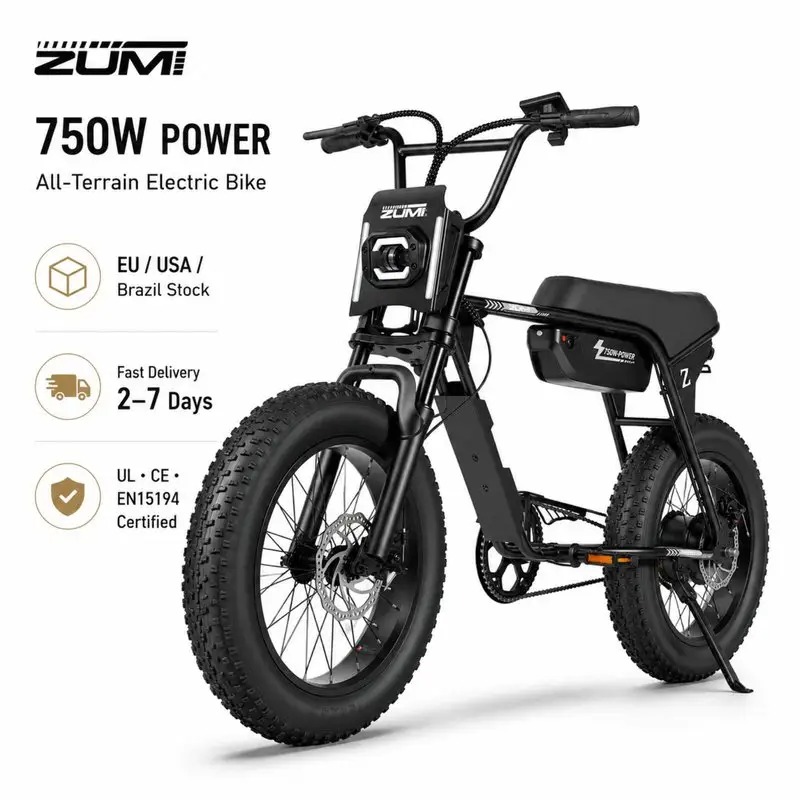
ZUMIBIKE operates overseas warehouses in three markets — the United States, Europe, and Brazil — specifically to address this constraint. The logic is simple: stocking selected electric bike models close to the buyer reduces lead time from weeks to days and makes smaller, more frequent ordering practical.
The overseas warehouse program maintains ready stock of selected ZUMIBIKE electric bike models in each of the three locations. These are not clearance models or discontinued configurations. They are current, market-certified electric bikes held in distribution-ready condition for wholesale buyers in the relevant region.
In the United States, the warehouse stocks electric bike models configured for the North American market — UL-certified, FCC-compliant configurations suitable for direct retail or dealer distribution. The US warehouse also maintains spare parts for the stocked models, which simplifies warranty resolution for importers who would otherwise need to source parts from China with long delivery times.
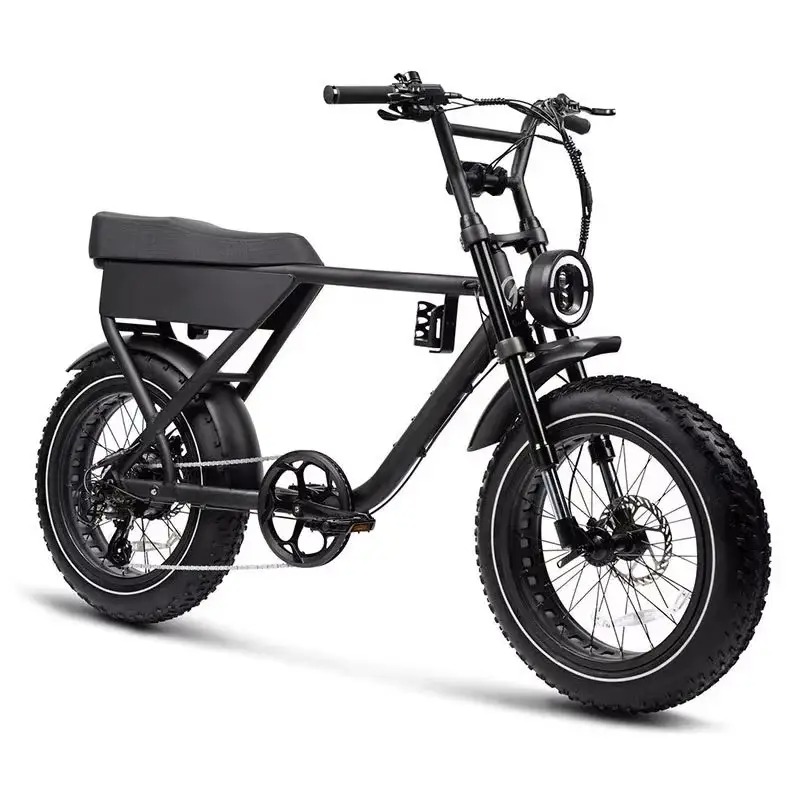
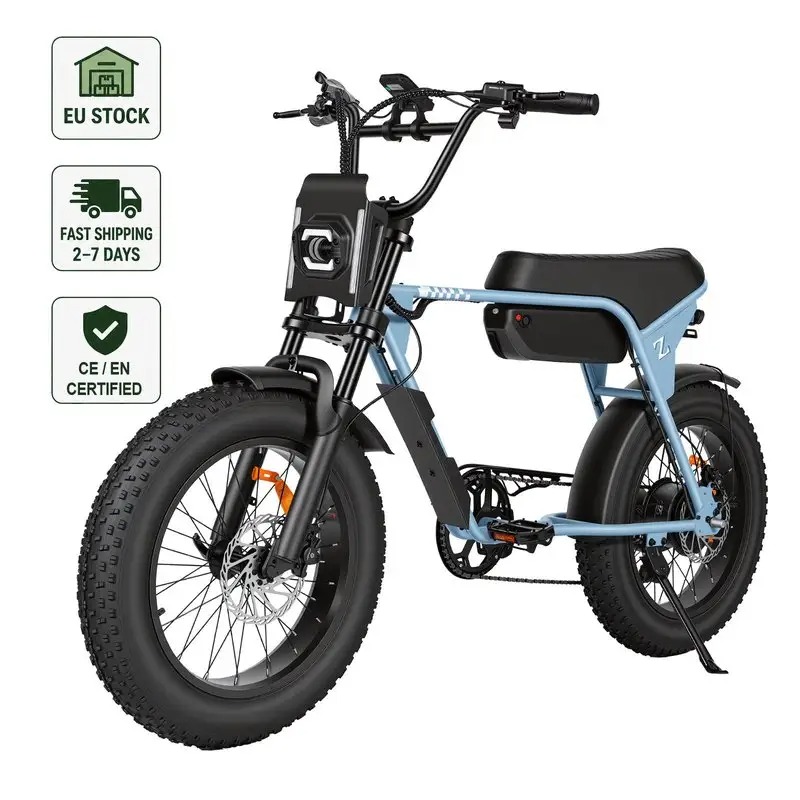
In Europe, the warehouse holds EU-certified electric bike inventory — CE and EN15194 compliant models, primarily the 250W folding fat tire configurations that are most in demand across Western European markets. European dealers can receive orders significantly faster than factory lead times allow, and replenishment orders can be triggered on shorter cycles, reducing the amount of capital tied up in local buffer stock.
In Brazil, the local warehouse supports the South American market with inventory that bypasses the complexity of long-haul direct factory shipping and Brazilian customs clearance for each individual order. For distributors building a dealer network in Brazil, the local warehouse makes smaller-volume dealer supply genuinely feasible.
The operational impact of shorter lead times is more significant than it might initially appear. When an electric bike dealer can reorder stock and receive it within a week or two rather than eight to twelve weeks, several things change.
First, safety stock requirements drop. A dealer who previously needed to hold 30 units to cover an eight-week replenishment cycle might only need 10 units when replenishment takes two weeks. That is 20 units of working capital freed up — capital that can go into marketing, expansion, or other product categories.
Second, market testing becomes practical. A dealer considering adding a new electric bike model to the lineup can order a small quantity from warehouse stock, gauge customer response, and reorder based on actual demand — rather than making a large upfront commitment to factory production and waiting months to see whether the product sells.
Third, seasonal demand spikes become manageable. Electric bike sales are not uniform across the year in most markets. Spring and early summer see volume increases that can be difficult to predict far enough in advance for factory production planning. Warehouse stock provides a buffer that allows dealers to respond to demand rather than predict it.
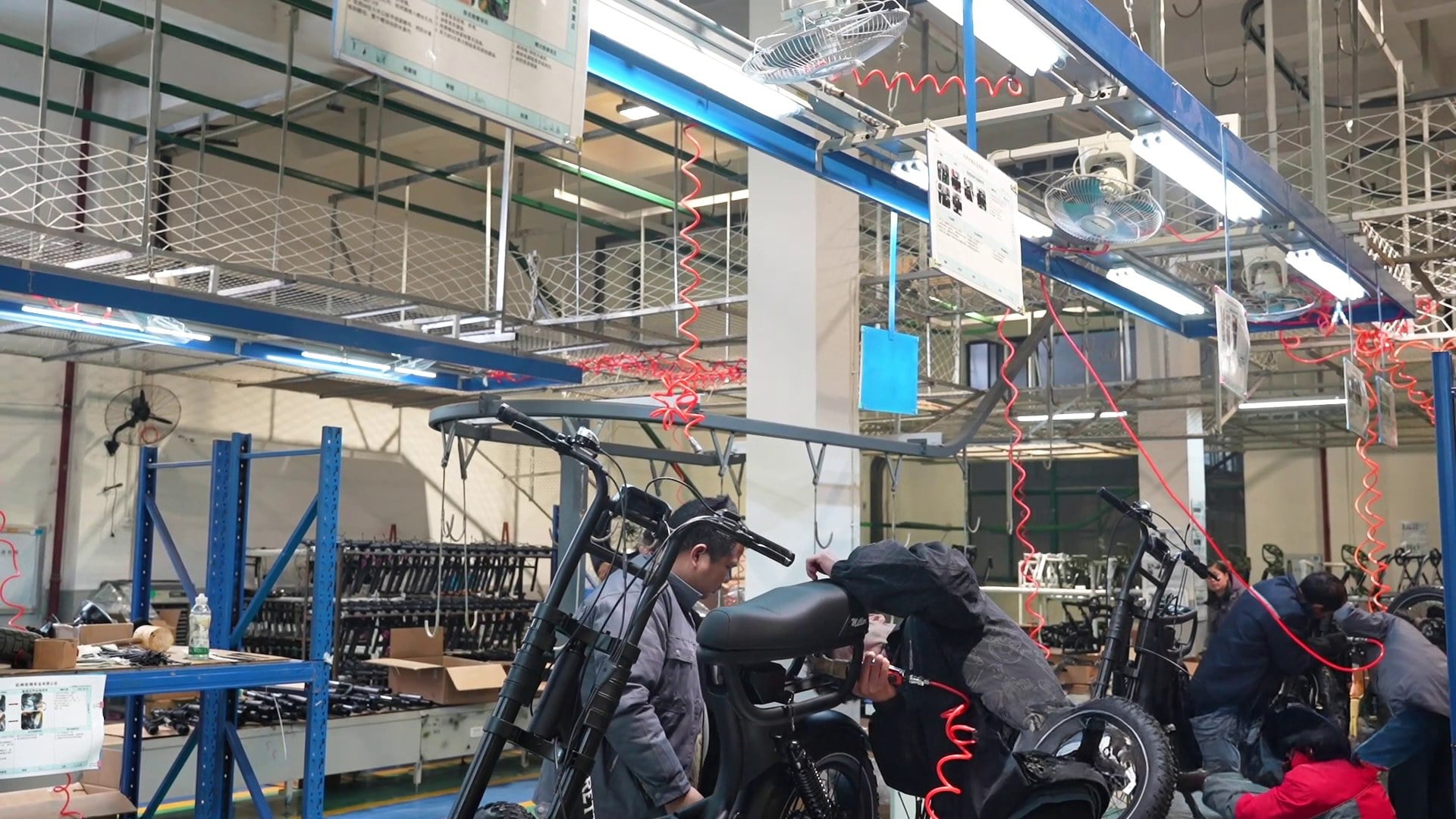
An overseas warehouse program is only as reliable as the factory behind it. ZUMIBIKE's 20,000 m2 Hangzhou facility with 300,000 units of annual production capacity provides the supply volume needed to maintain consistent warehouse inventory levels without creating shortages during peak demand periods.
The five-stage manufacturing process — frame fabrication, heat treatment, automated painting, multi-station assembly, and 100-plus checkpoint quality inspection — runs continuously to support both direct factory orders and warehouse replenishment. The 50-plus R&D engineering team manages product development cycles to ensure that warehouse-stocked models remain current and competitively specified.
Quality control at the factory level directly impacts warehouse performance. An electric bike that passes 100-plus quality checkpoints before leaving the factory arrives at the warehouse in distribution-ready condition. This reduces the inspection burden at the warehouse end and the return rate at the dealer end — two operational costs that are easy to underestimate when evaluating supplier proposals based on unit price alone.
Whether you are an established electric bike distributor looking to shorten your replenishment cycle, a new importer wanting to test the market before committing to factory production, or a dealer looking for a reliable local-inventory supply source, the ZUMIBIKE overseas warehouse program is worth a direct conversation.
Current warehouse stock levels, available models, minimum order quantities, and pricing for each regional warehouse location can be confirmed by the ZUMIBIKE sales team. Contact the team at [email protected] or via WhatsApp at +86 180 7278 3688 to check availability and discuss how the warehouse program fits your buying cycle and inventory model.
2026/08/03
Fix time zones, language gaps, and unclear protocols—boost speed, cut costs, and scale confidently.
2026/08/03
Avoid liability & import bans: Learn IEC 62619, UN 38.3, and UL 2271—plus how to verify real compliance (not fakes).
2026/08/03
Learn precise air pressure, rebound & compression tuning for optimal suspension performance. Get pro-level setup tips now.
2026/08/03
Discover how voltage drop saps performance—and proven fixes to restore responsiveness, range, and battery life. Read now.
2026/08/03
Discover data-backed protocols, smart infrastructure & operational fixes. Optimize now.
2026/08/03
How payload cuts 48V cargo ebike range by 15–50%+ — backed by real-world degradation curves, motor load science & fleet optimization strategies.
Comprehensive warranty, fast parts shipping, remote diagnostics and local dealer training


